
When you appeal a private parking charge, you are told the process is fair and independent. You appeal to the operator. Then you appeal to an "independent" appeals service. If you lose, you get sued by a law firm. We pulled the corporate records of the people running this system. The reality is staggering.
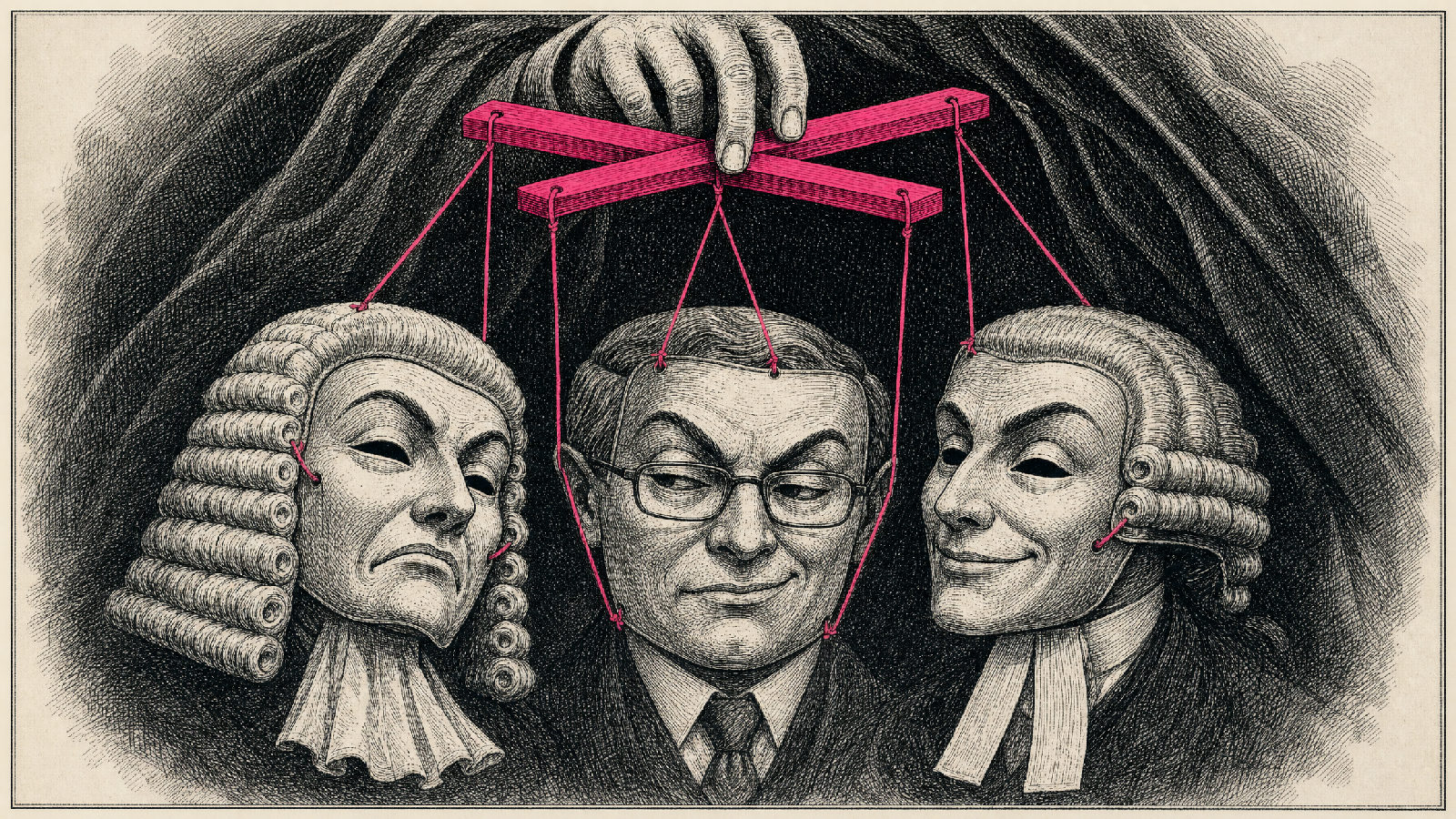
Imagine a system where the police force, the judge, and the prosecuting lawyer were all secretly owned by the same two people.
If you get a parking charge from an operator belonging to the International Parking Community (IPC), you don't have to imagine it. You are already in it.
The UK private parking industry relies heavily on the illusion of independence. When an operator issues a charge, they point to their membership of a government-recognised trade body (the IPC) as proof of their legitimacy. When a motorist appeals, they are directed to an "Independent Appeals Service" (the IAS). And when a motorist refuses to pay, they receive intimidating letters from a regulated law firm — often Gladstones Solicitors.
It looks like a robust, multi-layered legal system. But if you pull the Companies House records for the entities involved, the illusion collapses entirely.
The trade body, the appeals service, and the law firm are all connected to the exact same individuals.
The Architects of the System
To understand how the system works, you have to look at the people who built it.
John Llewellyn Gladstone Davies and William Kenneth Hurley are two solicitors. In 2011, John Davies founded Gladstones Solicitors Limited [1]. Shortly after, Will Hurley joined as a director [1].
Gladstones quickly became one of the most prolific "bulk litigators" in the private parking industry, issuing tens of thousands of County Court claims on behalf of parking operators against motorists who refused to pay their charges.
But issuing court claims is only the end of the pipeline. To get to that point, parking operators need access to the DVLA database to find out who owns the cars they are ticketing. The DVLA only grants that access to operators who are members of an Accredited Trade Association (ATA) [2].
In 2014, John Davies and Will Hurley set up a new company: The International Parking Community (IPC) [3].
The DVLA approved the IPC as an Accredited Trade Association [4]. Suddenly, the two directors of Gladstones Solicitors were also the directors of the trade body that granted parking operators the very data they needed to issue tickets in the first place.
The "Independent" Appeals Service
As part of their DVLA accreditation, the IPC was required to provide an independent appeals service for motorists [2].
They created the Independent Appeals Service (IAS) [5]. The IAS is explicitly marketed to the public and the government as an impartial, ADR-certified adjudication body [5].
But how independent is it? Both the IPC and the IAS operated for years as trading names of the exact same corporate entity: United Trade and Industry Ltd [6].
In July 2023, a new corporate entity was finally incorporated: The Independent Appeals Service Limited [7]. Its sole active director? William Kenneth Hurley [8].
Will Hurley is currently the CEO of the IPC [9]. He is the director of the IAS [8]. And he was a founding director of Gladstones Solicitors [1].
Even the IAS itself now admits this structural problem. In October 2025, David Finney was appointed as the new Lead Adjudicator of the IAS. In his official biography, he stated that one of his key priorities is "completing the full legal separation of the IAS from the trade association" [5].
That is a direct admission from the Lead Adjudicator that the IAS has not historically been legally separate from the trade body it is supposed to independently oversee.
The Numbers Don't Lie
If an appeals service is structurally tied to the trade body, does that affect the outcomes for motorists? The official statistics suggest it does.
The rival parking trade body, the British Parking Association (BPA), uses an appeals service called POPLA. In the 2024-2025 reporting year, POPLA decided 67,680 appeals and allowed 21.5% of them in the motorist's favour [10].
The IAS, in its 2024-2025 Annual Report, does not even publish its adjudication allow rate [11]. It only publishes the total number of disputes received and discontinued [11]. The RAC has publicly criticised the IAS for failing to reveal how many appeals were actually allowed or refused at adjudication, contrasting it with POPLA's transparency [12].
When an appeals service refuses to publish its success rate, and its director is the CEO of the trade body representing the parking operators, the claim of "independence" becomes very difficult to sustain.
The SRA Fine and the Missing Payments
The conflict of interest at the top of the system is compounded by the operational failures at the bottom.
In 2022, Gladstones Solicitors was fined £15,000 by the Solicitors Disciplinary Tribunal (SDT) for severe regulatory breaches [13]. The firm's automated telephone payment line lacked basic functionality to validate reference numbers. As a result, payments from motorists were left sitting in "unallocated suspense ledgers" rather than being credited to their accounts [13].
At one point, nearly £130,000 in unallocated payments was sitting in these ledgers [13].
Because the payments were not allocated, the firm continued to pursue the debts. The SDT found that this delay created a severe risk of issuing County Court claims and default judgments against motorists who had already paid their parking charges [13].
How to Break the Loop
Let's look at the complete circuit for a motorist:
- The Charge: You receive a parking charge from an operator. That operator is allowed to get your address from the DVLA because they pay membership fees to the IPC (run by Will Hurley) [9].
- The Appeal: You dispute the charge. The operator rejects your dispute and tells you to appeal to the "impartial" IAS. The IAS is directed by Will Hurley [8].
- The Lawsuit: The IAS rejects your appeal. You still refuse to pay. The operator then instructs a law firm to sue you in the County Court. That law firm is Gladstones Solicitors, founded and controlled by John Davies (who co-founded the IPC) [1].
It is a perfectly closed commercial loop. But you can break it.
If you receive a Letter Before Claim or a County Court claim form from Gladstones Solicitors, the most important thing you can do is not fold.
Their commercial model relies on the illusion of overwhelming legal authority. But in a County Court defence, you have the right to point out exactly who is suing you. You can argue that Gladstones Solicitors cannot be treated as an independent law firm evaluating the merits of the claim, because their founding director is the same individual who co-founded the trade body representing the operator.
You can challenge the independence of the IAS decision that rejected your appeal, citing the Lead Adjudicator's own admission about the lack of legal separation. And you can put them to strict proof on every element of their claim.
The private parking industry relies on you believing that the system is stacked against you by independent authorities. It isn't. It is stacked against you by a handful of people wearing different hats.
When you stand up to them in court, the hats fall off.
Revenge is best sent cold.
References
[1] Companies House, Gladstones Solicitors Limited (07535449) Officers. [2] DVLA, KADOE Contract Requirements for Accredited Trade Associations. [3] TransportXtra, "DVLA approves new parking association" (July 2014). [4] Companies House, United Trade and Industry Ltd (08248531). [5] The Independent Appeals Service (theias.org/about-us). [6] Hansard, Parliamentary Debates on Parking Regulation (May 2025). [7] Companies House, The Independent Appeals Service Limited (14994806). [8] Companies House, The Independent Appeals Service Limited (14994806) Officers. [9] The International Parking Community (theipc.info/people). [10] POPLA Annual Report 2024-2025. [11] IAS Annual Report 2024-2025. [12] RAC Media Centre, "RAC calls on private parking industry to publish full and transparent data." [13] Legal Futures, "Parking charges law firm fined for unallocated payments from drivers" (Feb 2022).