

There is a question that sits at the heart of almost every private parking charge, and almost nobody asks it.
The charge against you rests on a single piece of evidence: a timestamp from an ANPR camera. That camera recorded your number plate when you entered a car park, and again when you left. The difference between those two timestamps is the alleged overstay. Everything else — the letter, the debt-recovery threats, the court claim — flows from that number.
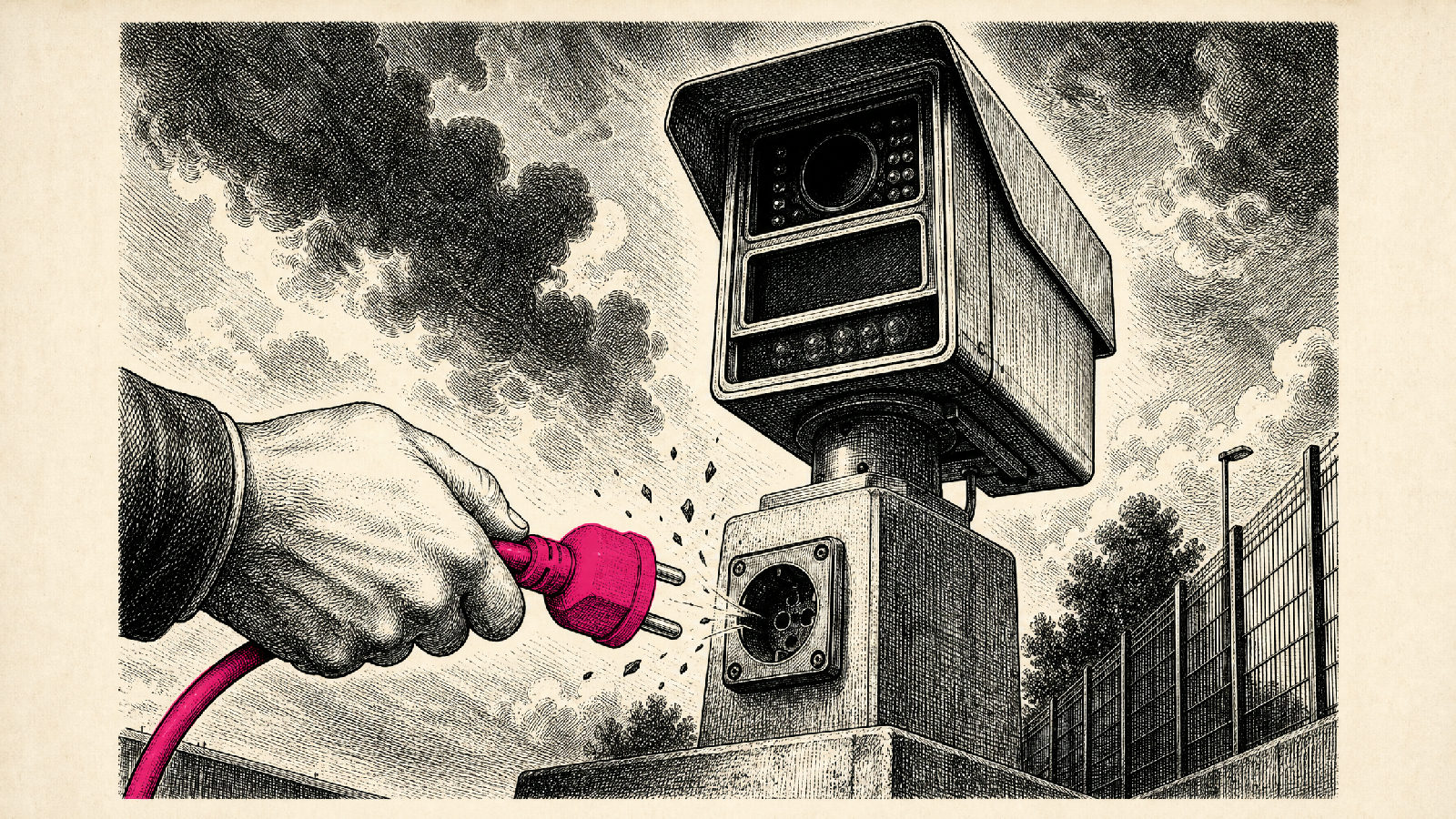
So here is the question: how do you know the camera was working correctly?
Not in a general sense. Specifically. On the day your charge was issued. Was the camera calibrated? Was its clock synchronised? Had it been serviced in line with the manufacturer's requirements?
The parking industry would rather you didn't ask. We did.
What the Law Actually Requires
The UK private parking industry is governed by the Sector Single Code of Practice, published jointly by the British Parking Association and the International Parking Community. Version 1.1, published in February 2025, contains a clause operators must comply with as a condition of their access to DVLA keeper data.
Clause 7.1 states:
"Parking operators must ensure that the equipment and systems used to capture photographic evidence in respect of controlled land are fit for purpose, maintained to a good standard in accordance with the manufacturers' operating requirements and those of the ATA to which the operator belongs, and are synchronised so that they record accurately photographic evidence of whether a parking charge is due."
That is a clear, specific obligation. Operators must maintain their cameras to a good standard. They must synchronise them. They must ensure they record accurately.
The question is whether they actually can.
We Checked Their Accounts
Companies House filings are public documents. Every UK company must file annual accounts that include a breakdown of its physical assets — its Property, Plant and Equipment. That note shows the total cost of the equipment, how much of it has been depreciated, and how much was invested in new equipment during the year.
Depreciation is the accounting mechanism by which the cost of an asset is spread over its useful life. When a camera is 100% depreciated, the company has written off its entire value — it has reached the end of its expected useful life on the books. A camera that is 90% depreciated is, by the company's own accounting assumptions, near the end of the line.
We pulled the most recent accounts for all ten major UK private parking operators. Here is what we found.
The industry average accumulated depreciation on Plant and Equipment sits at roughly seven in ten. For the two largest operators by charge volume — NCP and APCOA — the figure is 91%. By their own accounting, nine-tenths of their enforcement infrastructure has been written off.
This is not, to be fair, a story of an industry that refuses to spend. ParkingEye put £7.4 million into new equipment in the year we examined; NCP and Horizon spent millions more. But the spread is what's striking. At the other end of the table, CP Plus added nothing at all, and Euro Car Parks runs its entire operation on £78,000 of net equipment. Heavy investment at one end; near-obsolescence at the other — and, as we''ll see, no way to tell from the accounts which cameras are actually being maintained.
The Three Most Striking Findings
CP Plus invested nothing in new equipment. Its strategic report claims the company continues to invest in "technology and infrastructure." Its balance sheet tells a different story: zero pounds in new additions to Plant and Equipment for the entire year. For a company generating £34.9 million in revenue and issuing hundreds of thousands of charges, that is remarkable.
Euro Car Parks operates on £78,000 of net equipment. ECP generates £62 million in revenue. Its entire net book value of Plant and Equipment — every camera, every machine, every piece of physical enforcement infrastructure — is worth £78,396 on its balance sheet. That is less than the annual salary of a single member of staff. The equipment is 87% depreciated.
No operator separately discloses camera maintenance costs. Of the ten operators reviewed, not one breaks out camera servicing, calibration or maintenance as a separate line item. UKPC is the only operator to even mention the accounting treatment of repairs, noting they are "charged to the statement of comprehensive income during the period in which they are incurred." For every other operator, any maintenance spend is buried in operating costs with no separate disclosure.
One Fair Objection
A fully depreciated camera is not necessarily a broken one. Kit can be written down to zero on the books and still work perfectly. That's a fair point, and worth stating plainly.
But it is also exactly the point. Depreciation doesn't prove a camera failed. What it does is remove the operator's comfortable assumption that it didn't — and under the Sector Single Code the burden was never yours to begin with. It is the operator that must demonstrate the camera was maintained, calibrated and synchronised on the day it recorded you. Old equipment and invisible maintenance spend don't win your case for you; they simply mean the operator cannot lean on "the camera was obviously fine." If they can prove it was, let them. On their own filings, many would struggle to.
What This Means for Your Charge
The Sector Single Code places the obligation to maintain and calibrate cameras squarely on the operator. When an operator issues a charge, it is implicitly asserting that its camera was working correctly, was properly calibrated, and was synchronised accurately at the time of the alleged contravention.
But its own accounts provide no evidence that this is true. The equipment is old, the investment is often minimal, and the maintenance costs — if they exist — are invisible.
This matters because of how the burden of proof works. The operator must prove the contravention occurred. The ANPR timestamp is its evidence. If you challenge the reliability of that evidence — by asking the operator to produce calibration records, maintenance logs and synchronisation certificates for the specific camera on the specific date — you are not making a technical argument. You are asking it to do what the Sector Single Code already requires it to be able to demonstrate.
Many cannot.
How to Use This
If you have received a private parking charge based on an ANPR overstay, you are entitled to ask the operator to prove its camera was working correctly. A formal appeal should include a request for:
- the calibration certificate for the specific camera(s) that captured your vehicle;
- the maintenance log for those cameras for the 12 months prior to the alleged contravention;
- evidence that the camera clocks were synchronised at the time of capture;
- the manufacturer's recommended maintenance schedule and evidence of compliance.
Under the Sector Single Code, the operator is required to have this information. If it cannot produce it, it cannot prove the contravention occurred to the standard required.
All financial figures are drawn from the operators' own annual accounts filed at Companies House. Depreciation figures are accounting measures of accumulated depreciation on Plant and Equipment; they describe the book position of an operator's equipment, not the physical condition of any individual camera. This article is entertainment and general information, not legal advice.